What the print shows
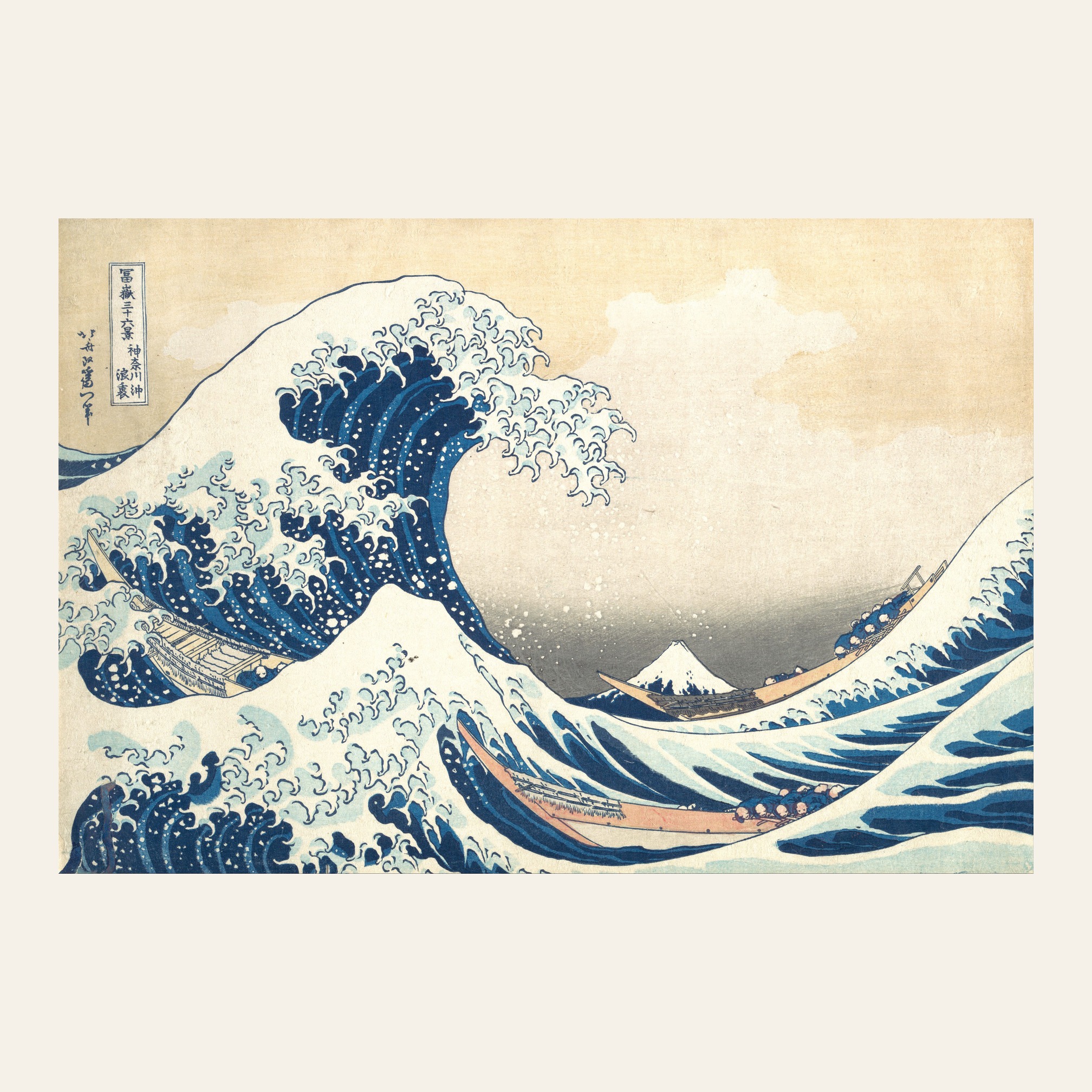
A huge wave rises on the left side of the picture, its crest breaking into claw-like fingers of foam. Below it, three long, narrow boats full of rowers duck beneath the water. In the distance, framed by the curve of the wave, sits Mount Fuji, capped with snow.
Its Japanese title is usually translated as "Under the Wave off Kanagawa." Kanagawa was an area on the coast of Edo Bay, near present-day Yokohama.
When and how it was made
Katsushika Hokusai designed the print around 1831, when he was about seventy years old. It is the best-known design in his series Thirty-six Views of Mount Fuji; ten more views were later added to the series, bringing it to 46 prints.
The Great Wave is a woodblock print, not a painting. Hokusai made the design, carvers cut it into wooden blocks, and printers inked the blocks and pressed paper onto them, one block per color. That process let the publisher make many impressions, which is why museums around the world, including The Metropolitan Museum of Art and the British Museum, own copies.
The series made notable use of Prussian blue, a synthetic pigment that had recently become available in Japan. It gave the prints their deep, long-lasting blues.
What does it mean?
Most readings focus on contrast. The wave is enormous, fast and about to crash; the fishermen are small and vulnerable; Mount Fuji, Japan's sacred mountain, is still and permanent. Nature's power, human fragility and lasting calm all share one frame.
The composition plays with scale. Because the wave sits in the foreground, the highest mountain in Japan looks like a small peak, almost like another wave. That visual trick is one reason the image is so memorable.
Why it became world-famous
Japanese prints began reaching Europe in large numbers in the second half of the 19th century. Artists such as Claude Monet, Edgar Degas and Vincent van Gogh collected and admired them, part of a wider craze known as Japonisme.
The image has been reproduced ever since, on posters, book covers and clothing. Because Hokusai died in 1849, the original print has long been in the public domain, which is why it can be shared and printed so freely today.
Wearing the Great Wave
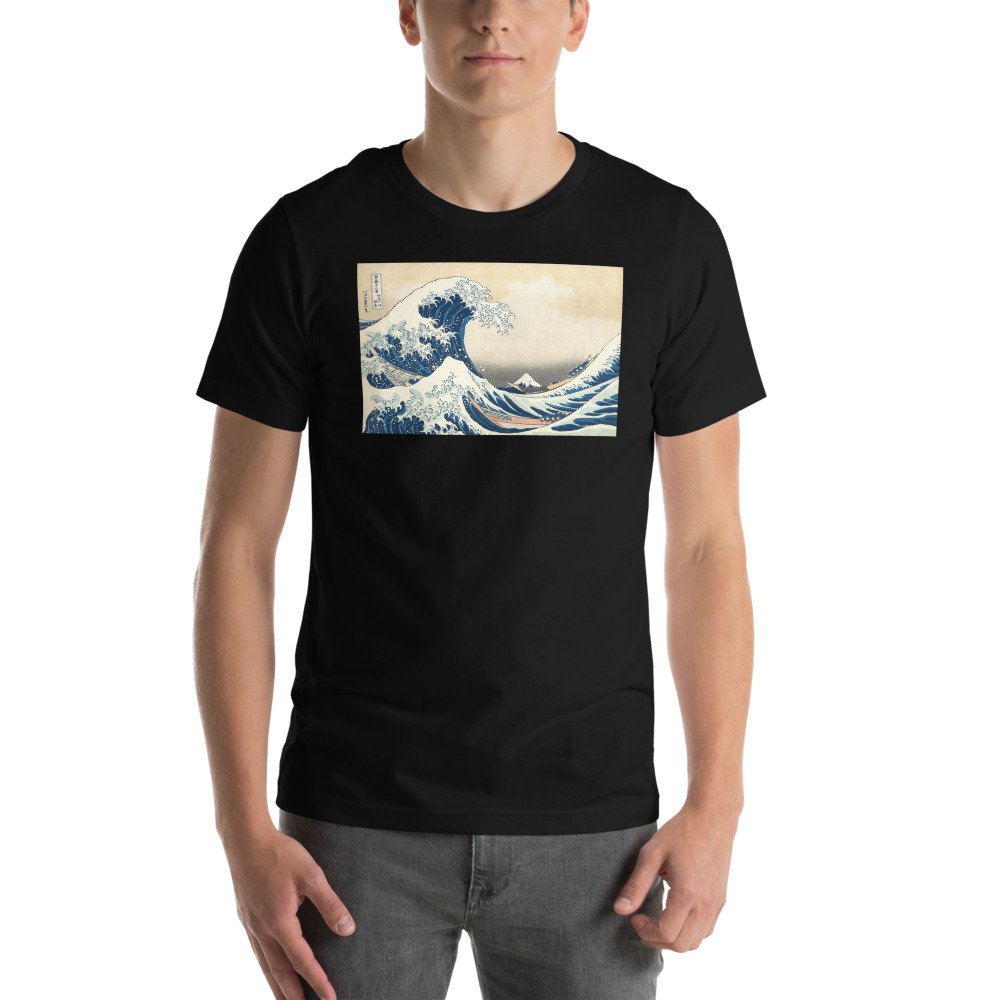
The blue-and-cream palette is easy to wear. On a white tee it reads like a gallery print; on black it looks bolder. Our Great Wave t-shirt is printed to order on a soft Bella+Canvas cotton tee.